
Customer Journey
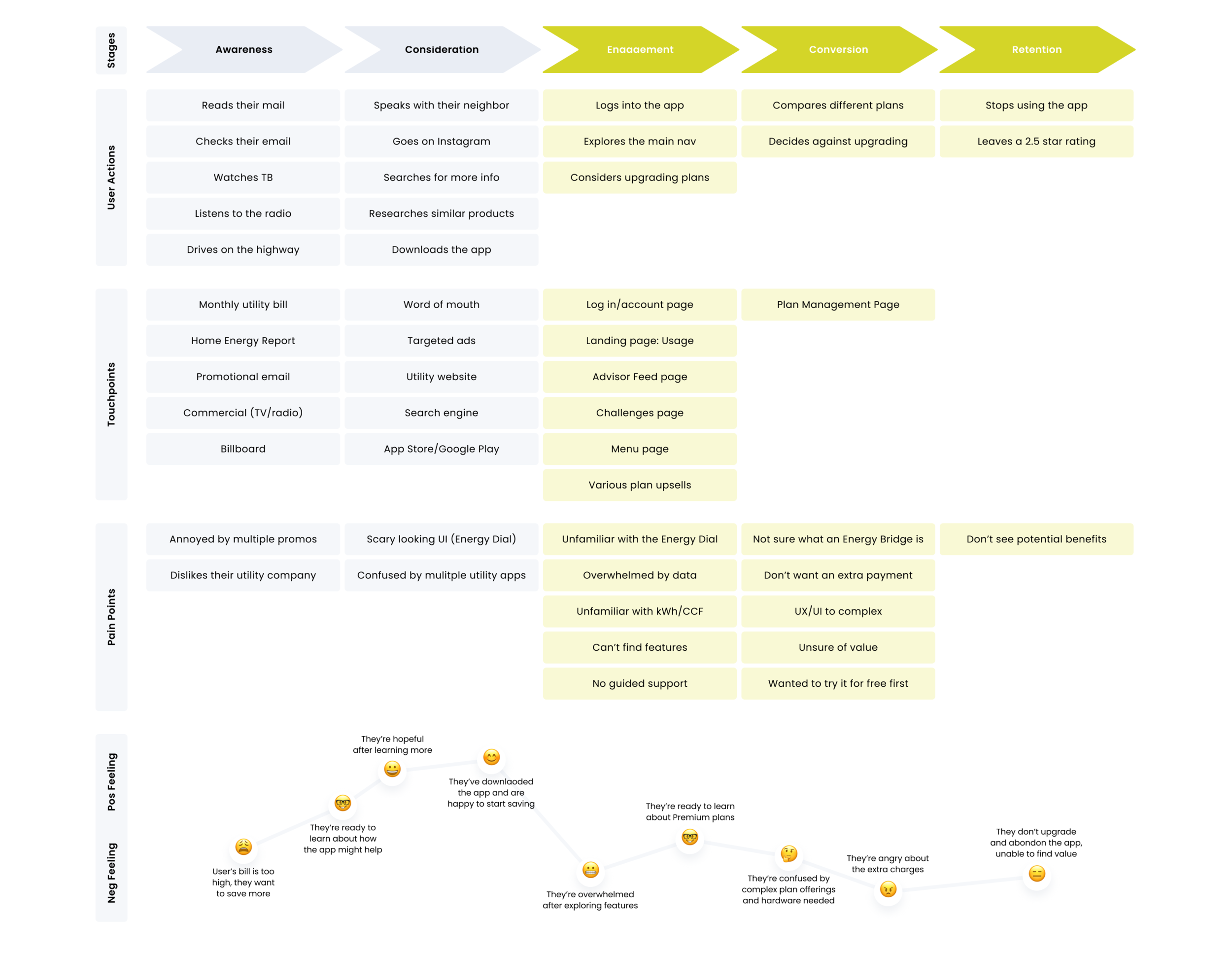
Internal research aimed at increasing conversion showed the biggest fallout points throughout Powerley’s customer journey were occurring primarily due to users navigating the app looking for a specific feature(s) that they were unable to find. This caused them to disengage and never return, though most of the sought-after features did exist in the experience. This research showed that Powerley’s best opportunities for long-term, sustainable user growth would come from holistically improving the customer journey — from login & onboarding, all the way to upsells & subscriptions.
My Roles
Strategic Direction
Creative Direction
User Research
User Testing
Product Design Lead
User Experience Design
Cross-functional teams
Product Design
Product Management
Voice of the Customer
Engineering (Mobile & Web)
Data Science
Quality Assurance
External Research Consultants
The Problem
Users who download the app are not logging in
Not retaining Day 1 users
Users are not upgrading their plan
Hypothesis
Users confuse this app with existing utility apps
Users find limited engaging features in the Basic experience
Users don't understand the value of the app or Energy Bridge hub, therefore can’t justify the cost of upgrading
Users are confused by the differences between plans
Users are unaware of the free trial
Lack of support
The Goals
Us: Increase engagement, retention, and conversion
User: Better able to understand the capabilities of the platform and begin their app experience
Utility: Increased number of users on the Premium experience within the utility territory
Success Metrics
Increased Upgrade/Energy Bridge hub request rate
Decreased monthly churn rate
Challenges
There were several challenges with this project. Historically, many teams focused on small, iterative projects working towards the same end goal, but there was little incentive to rebuild the whole journey. This lead to disarray in the app and, the scope to correct these issues end-to-end was significant—we didn’t have the bandwidth to properly achieve our vision in the short-term. We were also under a tight time constraint imposed by one of our largest commercial customers, which didn’t leave room for the proper amount of user testing pre-launch.
Approach
This redesign was part of a company-wide initiative to drop everything on the roadmap and work together in an attempt to seriously increase conversion in just a few quick sprints. During this time, we were able to leverage top talent from across the company to work on solving problems and rebuilding this journey from the ground up. Though we knew that this flow could grow to be something much larger, we focused on creating an MVP that met the core needs due to time limitations.
Internal Research
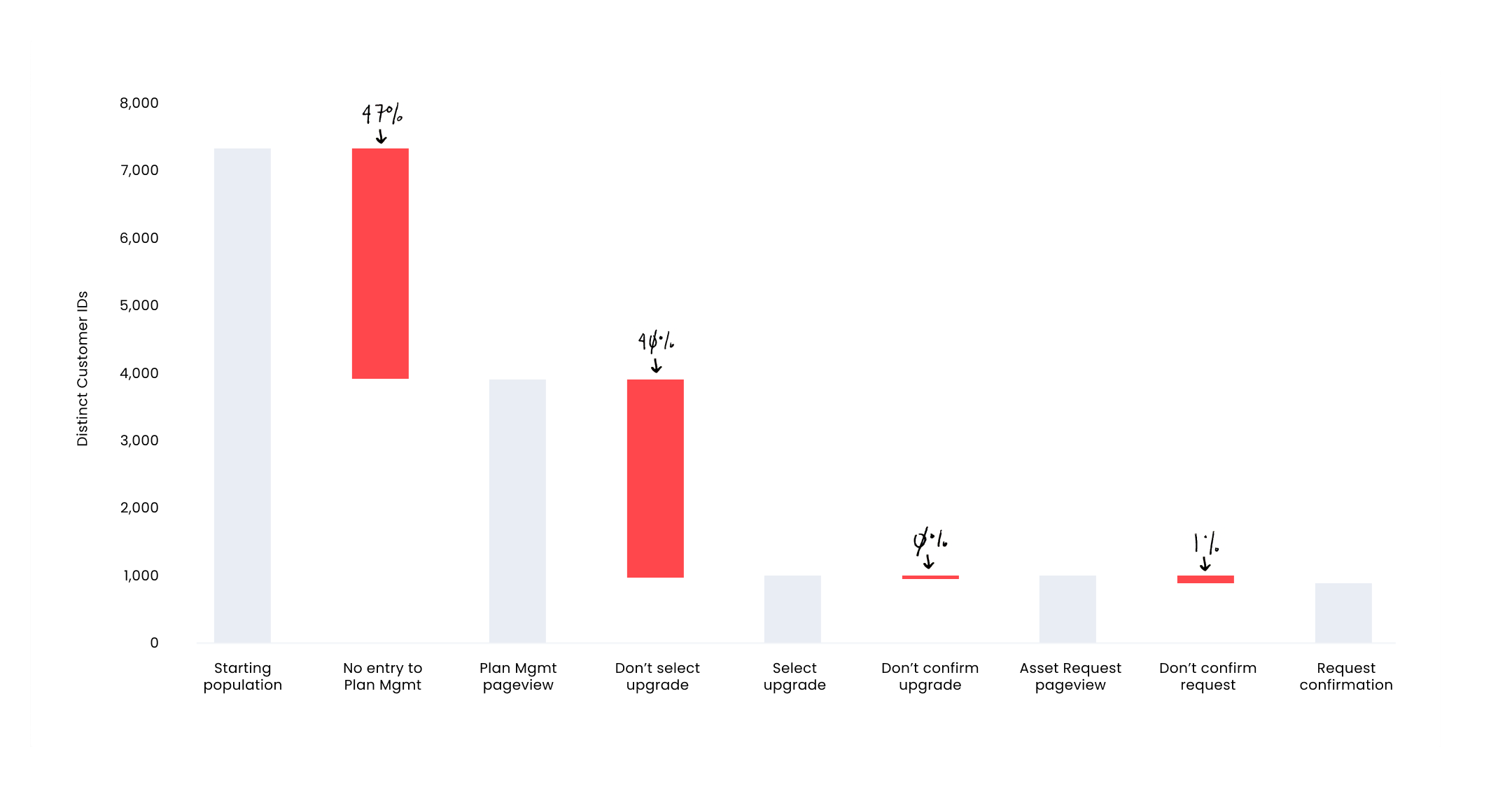
After looking at current fallout point data and user reviews, we were able to identify the steps in the process where users fell off, not leading to our end goal of conversions. The key pain points were:
No Entry of Pathway to Plan Management
No Action in the Plan Management Pathway
Do Not Select ‘Free Trial’
Do Not Confirm Subscription
Do Not Submit Energy Bridge request
Discovery
Various utilities have deployed gamification related EE programs, and multiple competitors have invested resources into building up gamification platforms of their own.
Overall, we found that challenge & reward features are new to the Home Energy Management (HEM) industry, but most offer only Demand Response (DR) challenges and cash rewards.
Ideation
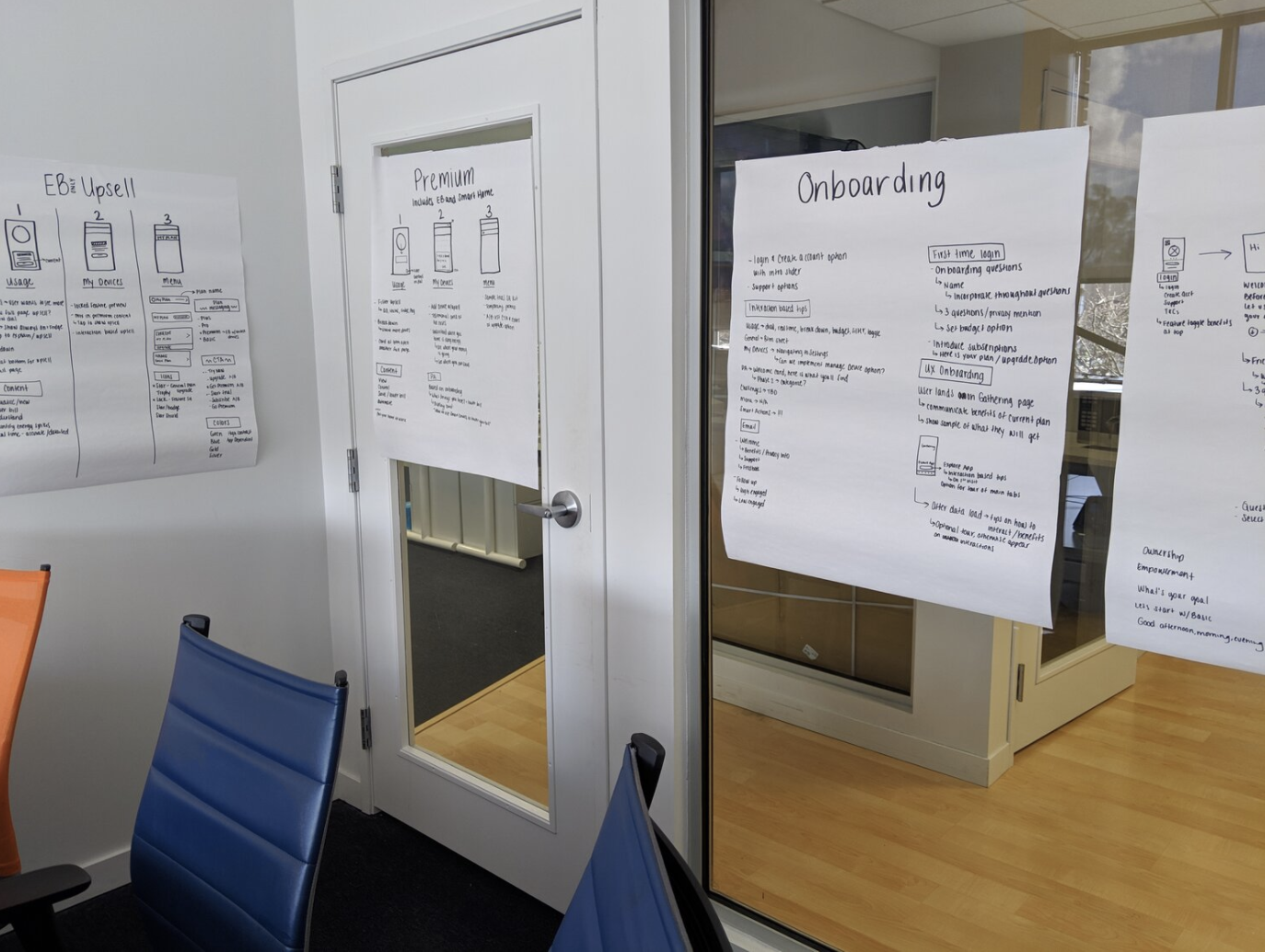
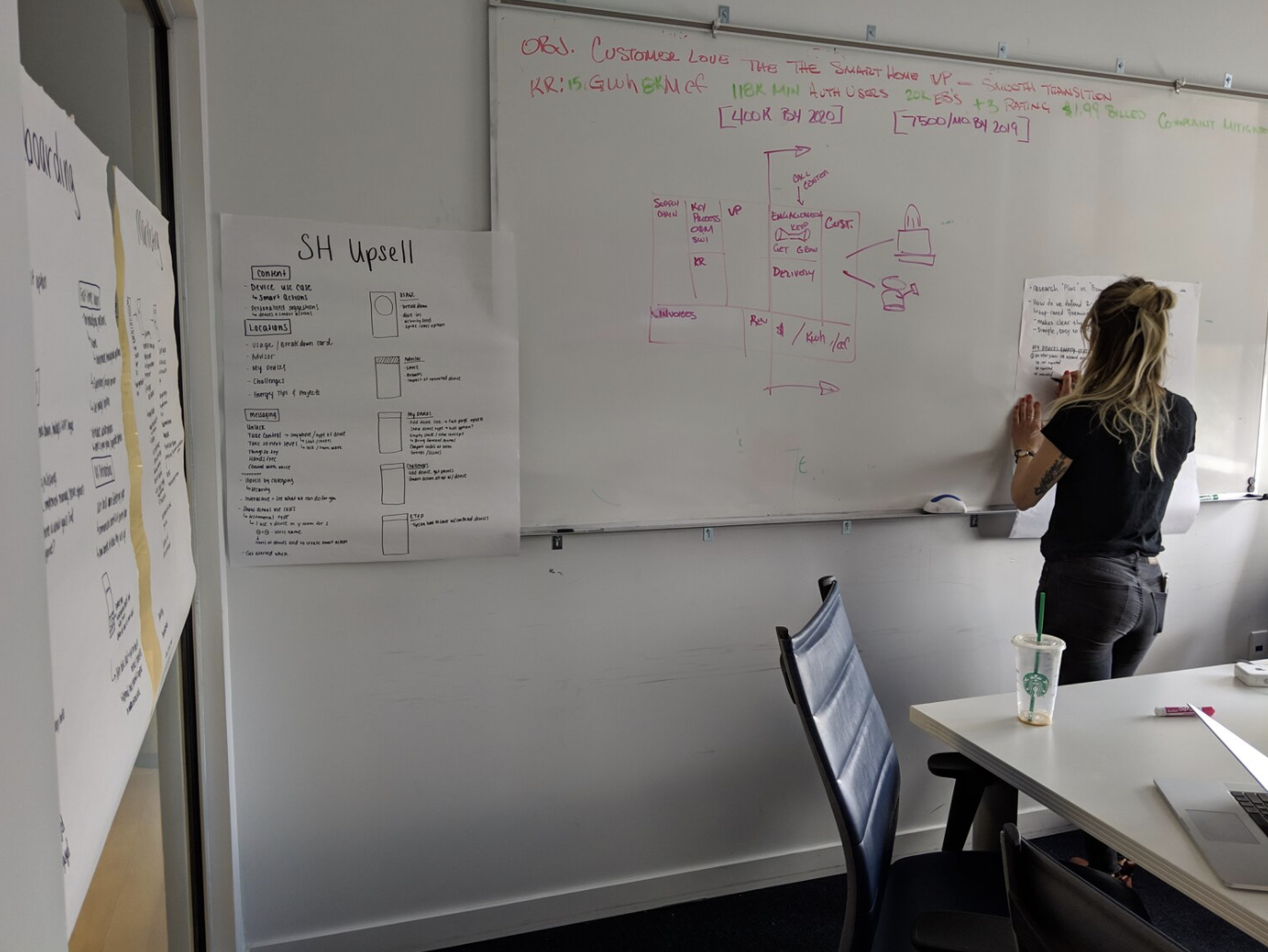
We brainstormed, created user-flows, customer journey maps, and lots of wireframing, prototyping, and iterating mock ups.
Testing
In the short amount of time we had, extensive testing wasn’t on the table, but we did manage to perform a Voice of the Customer survey, and several small A/B tests.
Solution
Value Proposition Intro
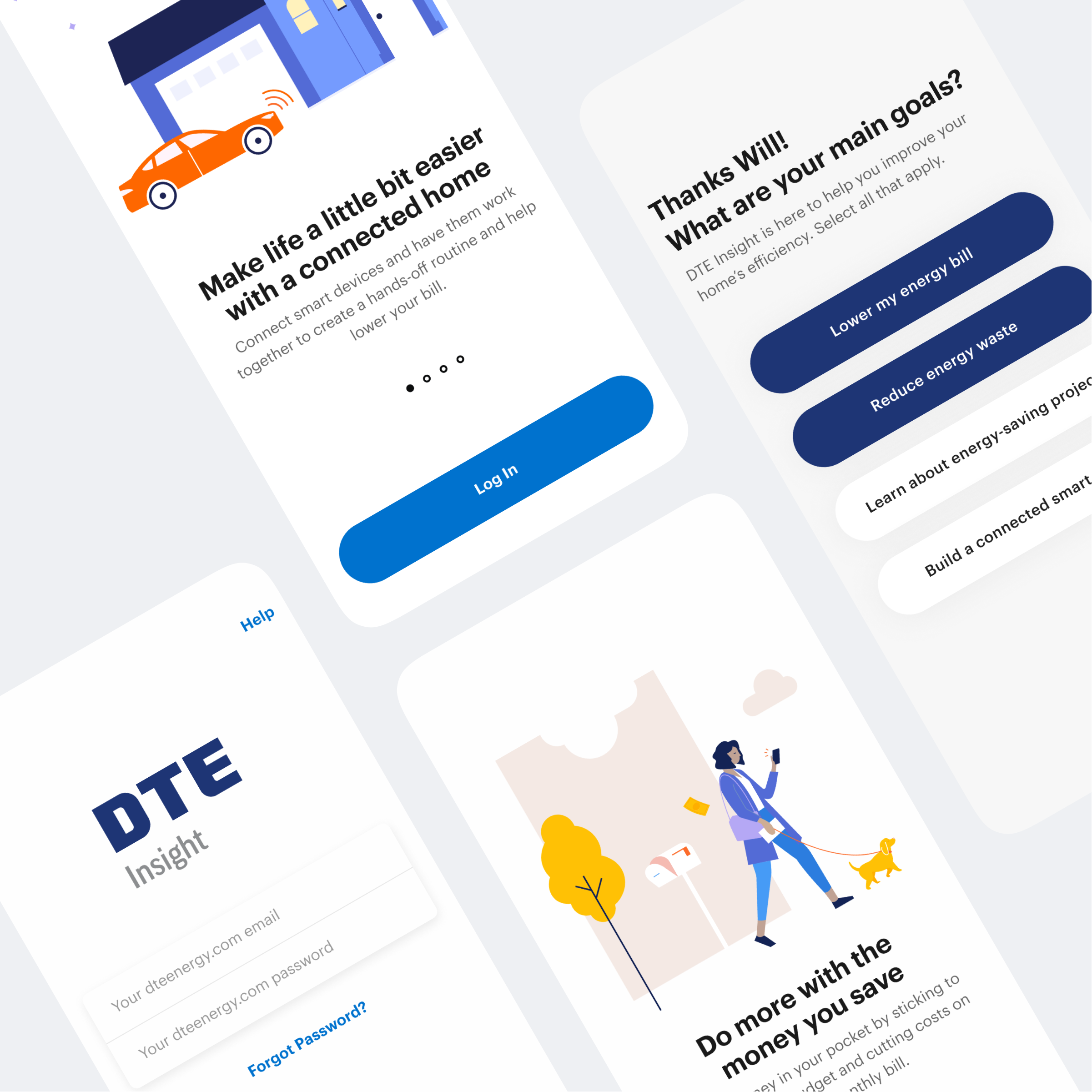
To increase new user engagement and retention, we added a set of value propositions to communicate benefits of the app prior to logging in. This addition also immediately sheds light on the ability to upgrade, and displays clear differentiators between our app and any existing utility apps (both are utility-branded, so customers were confusing the two). These props align with marketing messaging and reflect Voice of the Customer insights.
Login Enhancements
To accomplish successful authentication and decrease pre-login churn, we made several small enhancements to the app login page, such as:
Updating hint copy in form fills to reflect more relevant information (i.e. letting the user know to log in with their existing utility credentials)
Bring more visibility to support links
Tag all CTAs on the backend to properly gather data
Onboarding Survey
The addition of an Onboarding survey allows users to naturally navigate the experience while providing new information. This survey not only allows us to collect important information, but is a great customer service tactic. A range of questions are fun (if done well) and brings the user closer to an 'aha!' moment, by showing them what the app is capable of for them. This level of personalization will increase user engagement and retention by ensuring their best interest is in mind.
Onboarding Email Campaign
As part of implementation, new users will automatically receive on-boarding emails introducing them to app benefits and all of the features it has to offer, as well as workflows for new Energy Bridge requests.
Help Center
In order to bring awareness to our (sometimes complex) features, we created a Help Center that includes many detailed articles. Making support more accessible throughout the app provides an avenue for customers to answer questions and discover feature value and functionality on their own.
Home Advisor Enhancements
Using the Advisor feed as a channel to direct new users to the Help Center enables ease-of-learning about the app. User’s onboarding survey responses are sprinkled throughout the experience in microcopy, and the advisory insights they’ll see are based on personas they’ve chosen to identify with. This creates sustained engagement and a better utilized platform.
Subscriptions
Our most dramatic improvement simplified the upgrade process, better answered the ‘Whys’ of the Energy Bridge hub, provided subtle plan upsells in practical places, and offered a respectful cancelation process. At the same time, these processes were also intended to minimize churn. Overall, this approach allowed for users to upgrade with minimal friction and allowed Powerley to deliver more Energy Bridge hubs to the field.
Results
So far, this product was only deployed on iOS at one utility. After one month, request rates increased by 25%, which represents a large expected net impact in Hardware/Software revenue over the period of one year from this utility alone.
In addition, iOS had been traditionally lower-performing than Android with respect to conversion rates. Of the 73 weeks from January 2019 to May 2020 (just before launch), iOS only led in request rates 27% of the time, with only one instance of two consecutive weeks. Post-launch, iOS has had a higher request rate than Android for all 4 weeks.
By the end of this initiative, our team had made sweeping changes that united multiple areas of the app with one common goal. Our accomplishments demonstrated that all-hands-in initiatives could be successful and would be supported by executives.
Onboarding findings also helped reframe the conversation around user motivation.
Next steps
Due to a limited timeline, all of our efforts launched as MVP products. Phase 2 items consist of:
Roll out to Android. The impact to iOS is evidence that the new customer journey has an improvement on conversions and although the population of Android users is less, the total net impact to Android over one year can be expected to be more than that of iOS.
Add a demo version of the app to the Value Propositions introduction flow. This allows users to experience the apps’s features prior to logging in so they’re aware of differences between multiple utility apps.
Explore the potential of combining our app with their existing app(s) to create a solution that offers everything in one place to limit customer confusion and enhance the user experience.
Add social proof to the Value Propositions introduction flow.
Create a more robust Onboarding survey, allowing us to gather more information while providing the user with additional app capabilities and features.
Implement a guided tooltip flow to explain all features and replace our temporary solutions.
Expand the Advisor and use it as the app landing page. This would allow for us to create an extensive dashboard of personalized insights and data in a less complex view than our current app-landing, creating a better first impression.